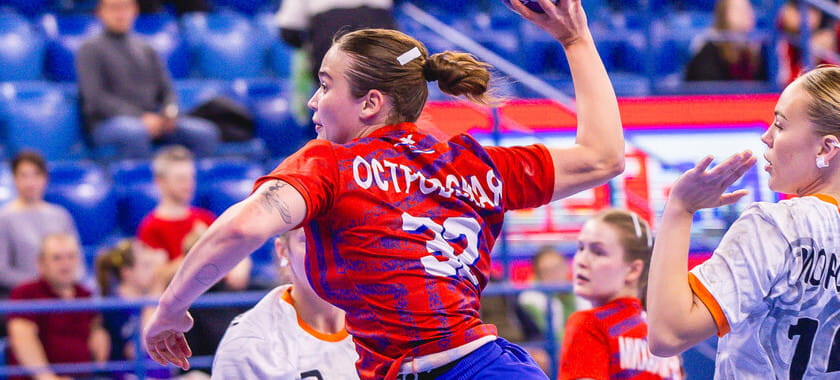
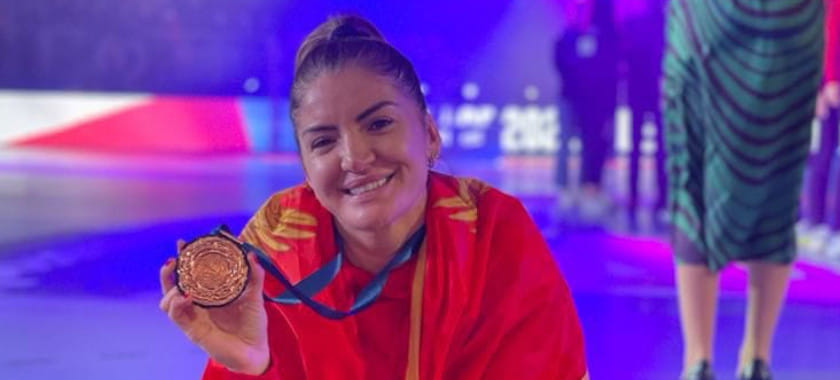
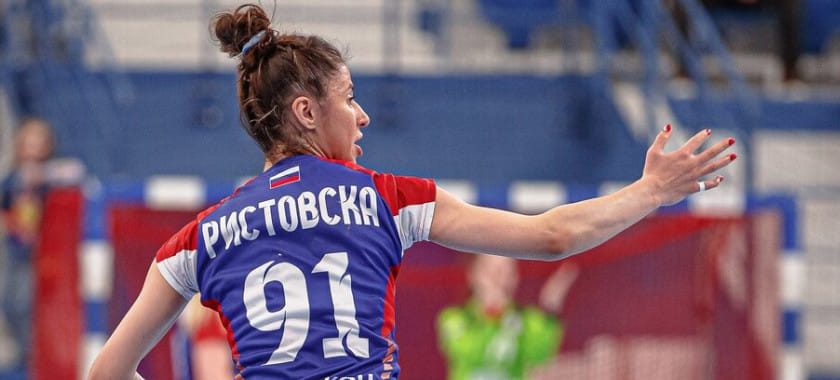

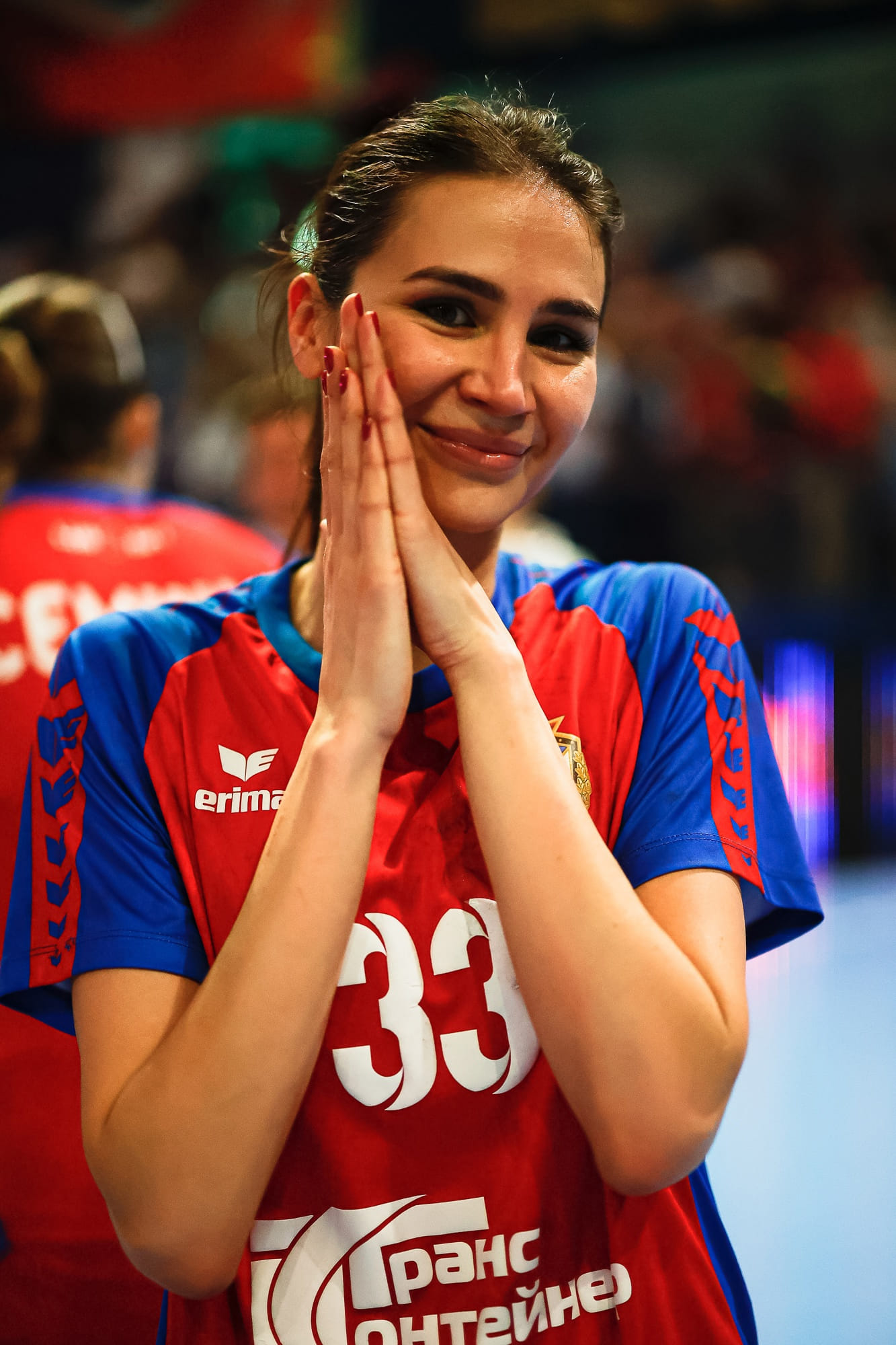
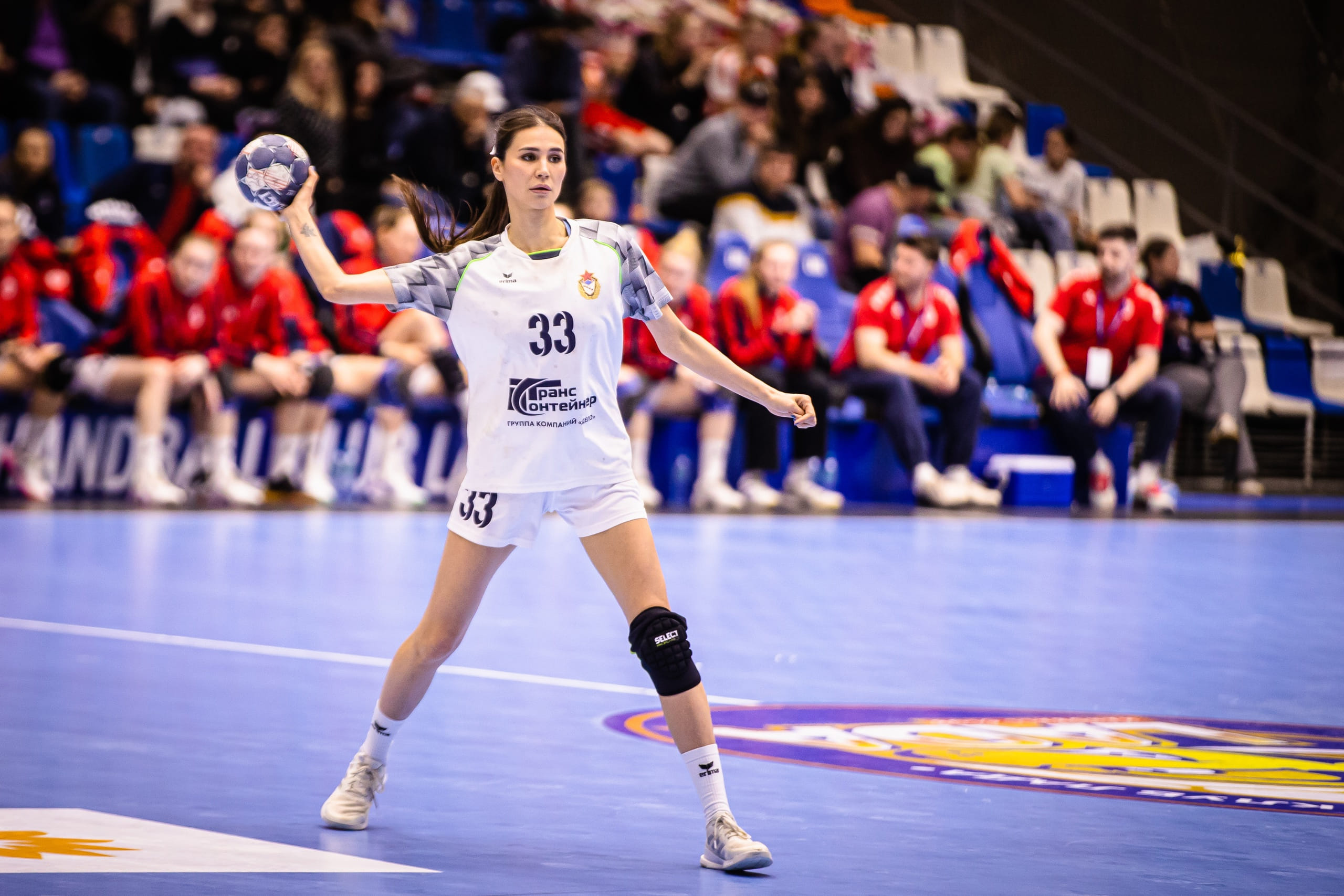
— They say, live your life in such a way that a movie could be made about it later, — Ekaterina Ilyina is smiling.
We are sitting in a cafe on Mosfilmovskaya Street, directly opposite the pavilions of the capital film studios. Katya tells her story about childhood, spent in working-class neighborhoods of Togliatti, about Rio 2016 Olympic gold, the terrible days after surgery, when she had to learn to walk again, about the tears of the last gold with CSKA…
Two hours of action, a ready script of a sports drama. And we listen and feel sad that it’s over and the last episode of a glorious sporting career was filmed a few day ago when CSKA beat Rostov-Don and became the champion of Russia again.
— Come on? — Katya laughs. — I have new series in the plans — Supermom and Superwife!
— The first words after your last match in career: "I’m happy to leave with gold!" Do you have an area of glory at home, where all the awards are kept?
— Yes! I have a big rack at home where all my medals are gathered from children’s to Olympic.
My mother used to keep these awards. She has always treated all my achievements with special awe. But then I decided to take it, it’s a part of my life. Now when my friends come over, first of all they come to this shelf. They are always amazed how many awards are there. It’s pleasant for me, I’m proud of each of theses medals because great work and part of my soul are behind each of them.
— How did it all start? You almost never talk about your family in your interviews.
— It’s the simplest. I was born in Togliatti. My parents worked at AutoVaz, almost everyone worked there then from morning till night. We lived modestly, but it was always warm and cozy. I was a very active child, I loved going out with friends, chasing in the yard, playing catch-up and hide-and-seek. There were no gadgets and it was great.
It all started from the day when a coach Dmitriy Vladimirovich Savinov came to our class. He told us about handball section and invited those who were interested. I realized immediately that I want to try. I didn’t know then that it would become a whole life for me. But I was interested. It changed everything.
I agreed at once. Honestly, I didn’t dream of being an athlete at that time, I wanted to be a teacher in childhood. I loved how children bring flowers and sweets to their teachers on September 1, it seemed so beautiful!
But my father was an athletic person. He was fond of chess, played big and table tennis, was a candidate for the master of sports. His friends came to us on weekends, played chess, discussed everything. And it always seemed to me that sport is something very important, something that helps to live.
— Did you say "was"?
— He passed away when I was 12. It was a hard time for my mother — to stay alone with two children in 2000 with little money and miserable wage. She tried desperately to hold on, but I saw how hard it was for her.
Mother has always been an example to me — she never complained and just worked so that my sister and I wouldn’t feel deprived. But I saw her literally killing her health at the factory. And then I promised myself: "One day I’ll make sure she would never be back there".
When my father passed away, I realized that I had to help mother already. Since the age of 14 I’ve been earning on sports. Yes, the money was very little, but it was important for me. I didn’t ask mom even those five rubles for a bus, I knew I could do it myself.
— Were you paid bonuses when you were 14?
— It was already a real salary. I had my first "grown-up" job, I played in Lada-3. And when I turned 18 I decided to move to Krasnodar, handball should have been my profession there. At first my mother disagreed, she was afraid to let me go to another city, but I insisted. When I received my salary, I sent it to my mom at once and said: "That’s all, you don’t go to the factory anymore!"
— Where is your mother now?
— She lives in Togliatti, she is doing well. My older sister is also there, she is focused on my niece (smiling). My sister has a common, simple, but happy family. I always support my family as much as I can. My heart is peaceful because I know they are fine.
— Did handball win you immediately?
— Yes! It was love at first sight. When I started training I realized that no workout can be missed. Due to illness or other reasons, even the most justifiable. Friends called me to go for a walk: "Why would you go on this training? Let’s go for a walk!" But I always answered: "No, I’ll go to handball". Because if you miss once, there will be the second, third time and that’s all, the dream will disappear.

I remember how we came to the match with Lada. The coach said: "It will be a beautiful supermatch". I was delighted: Levon Akopyan’s Aqua and Evgeniy Trefilov’s Lada played. I watched and thought: "How do they do that? How do they move, throw, understand everything on the court?" And I realized that I could do that too.
— Was it difficult to combine training with school?
— It wasn’t easy. By the age of ten I already knew that handball was the most important thing for me. I understood that sport can give a lot, all that needed is to work. But my mother always told me that study is also important and scolded me when I returned without homework, I simply didn’t have time.
I woke up at 7 am, went 40 minutes to the gym, then to school and to the second workout after that. I returned home at 9 pm and fell asleep immediately.
Of course, I understood that I had to pay attention to lessons because education remains with you. But at that time it seemed that I had no time for anything but handball. I remember how I came to school after morning training, sat at the desk, propped my head in the hand and fell asleep.
— It’s hard. But were there any moments when you wanted to give everything up and just live like everyone else?
— There were. It happened when I moved from Togliatti to Krasnodar. Aleksey Nikolaevich and Tatyana Konstantinovna Gumyanov called me there. At first everything seemed clear and simple. But from the very first days Aleksey Nikolaevich showed that there would be no favors. He was really strict with me. Nasty Kudryashova and Masha Anikina moved to Krasnodar with me then. We all worked hard, gave our best during training. Every day I brought a net with balls there and back.
And the coach demanded all the time, corrected, pointed out the errors. Sometimes it seemed that I did everything wrong, and it pressed on me. There was a moment, when I simply couldn’t stand and said: "That’s all, I’m leaving!"
But I knew deep down inside that he was doing it not to break me but to make me stronger. And this understanding helped me to stay.
The second coach Natalia Yuryevna Tsygankova tried to call me down, said that Gumyanov just believed in us and demanded more than from others.
Aleksey Nikolaevich called me for a serious conversation the following day: "You’re a true diamond. I see you have everything to shine. You just need to trust me and work together". These words struck me deeply. And I realized: indeed, it will be hard but it is my chance. And I decided to stay.
I’m grateful to them for that experience and faith they’ve put in me.
— When did you realize that you became a true diamond?
— At the Olympics in Rio. We were standing on the pedestal, holding this heavy medal in my hand, and I thought: "Yes, we seem to be really cool!" It was the moment when I understood that I needed to go through everything to stand there.
— Did you have an idol in handball?
— Yes, I did. I liked Irina Poltoratskaya, Dibirova after marriage. She played as a centre back, like me. I always liked her view of the game, her pauses, hidden passes. She played beautifully and I have always admired that.
— Did you ever confess to Irina Igorevna in it?
— In this season only. I went up to her after one match and just told her that she was an example for me in my childhood. She smiled and hugged me.
— Do you remember your first match in the championship of Russia?
— Of course! I debuted for the main Lada team. I was very excited, I trembled inside. I was given only two-three minutes at the end of the match, when the team was already leading. But I understood that it was a chance to prove myself!
Many spectators attended those matches with Lada. The whole world seemed to be looking at me. I managed to undertake successful actions during these three minutes.
— How many times did you receive red cards in your career?
— Only two times. The first time happened in Astrakhan — a scuffle began, I just started to separate everyone and suddenly I was surprised to see a red card in front of me. And the second was in qualifying matches for the London Olympics. These were the "adventures".
But generally I always tried to play calmly and cautiously. Emotions are your enemies in the game. When you get angry or start to flip out, it only gets worse. Over time I realized that you should be in complete control. If you get hit, it means they want to knock you out. So, why should I help them in it? It’s necessary to keep your head cool and heart warm, then you are really stronger.

— It’s an exorbitant dzen for game sports. Don’t you play chess by chance, like you father?
— I started again recently. My friend introduced me to a chess teacher and said: "Would you like to try?" The first class lasted three hours, I got interested, began to study coordinate system, the basics of the game… It’s very interesting and it looks that I’m getting involved.
— White or black?
— Only attack, only white! Queen’s Gambit is our everything (laughing). I’ve been playing my whole life in attack not for nothing, so only forward even in chess!
— Rostov-Don is a big page in your career. How did you make up your mind for a trasfer?
— It was because of Jan Leslie. I have always wanted to try European handball —rapid and modern. But I didn't t want to go abroad. And here is a chance — Leslie, one of the best European coaches himself came to Russia. It would be foolish to lose this opportunity and I decided to try.
— What were your expectations and what was the reality?
— The reality turned out to be even better than I’d imagined. I had never seen such a structured approach before — we had not only plan A for each game, but also plan B and plan C. Leslie always said: "We won’t need plans B and C because plan A will succeed". But still we had it and it gave us confidence. And he always added with a smile: "And if it doesn’t work, Kato, I have several trump cards in my sleeve".
— Kato? Was Jan Leslie the first to call you this way?
— No, I had this nickname from my childhood. I even don’t remember where it came from, but it took root.
Regarding Leslie, it was one of the first times when such a strong coach appeared in the Russian Super League. Rostov managed to win gold with him, that had been out of reach for a long time. I just caught this time with the team — I won three championships of Russia, the Cup and Super Cup and played in the Champions League. Leslie wasn’t with us in all of these victories, but this new chapter started with his arrival. It was an amazing time and I’m proud to be a part of this story.
— Do you remember when you were called to the national team for the first time?
— Yes, it happened when I was 21. Yevgeny Vasilyevich Trefilov called me. I was really worried, I was shaking like a leaf. Everyone said he was strict, the workouts were hard and he was a very serious person. But I understood that it was a great opportunity for me.

— Is it scary when Trefilov shouts at you?
— Honestly? At first, yes, it was a bit scary. He is very demanding and loud, it’s always stressful when someone shouts at you. But over time you realize that it is his way of making you better. And then you are no longer afraid and you start working even harder.
— Finally we got to the Olympics. What is your most vivid impression of Rio-2016? Awarding?
— No, the brightest impression is a penalty in the match with Norway. I saw how the entire team fought, not sparing itself, how earned penalty shootout. And some even refused to throw it! It was important for me to stay in the moment, go and score.
The Norwegian goalkeeper Katrine Lunde was at the gates, we had played in Rostov-Don together and she knew all my techniques. I decided to throw three consecutive times in the same corner of the goal. It was risky but it worked!
— What a nerve!
— I just switched off all emotions and fear. I knew that the team and our coaches are behind me. The arena buzzed and our faithful fans were in the stands, as well as Sergey Nikolaevich Shishkarev, who has done a lot to handball in our country and has always supported us from the very beginning. His faith in us gave an incredible power. Father Andrey was nearby (the confessor of the national team — Handballfast), as well as supporters from Russia. This support was very important for us. And this moment will stay with me forever.
— A movie about the Olympic gold in Rio will be shot. Do you expect this moment to be in the script?
— Movie making is a creative process and much depends on screenwriters and director. But I’m looking forward with great interest and excitement how it will be shown. I really like the idea of returning to these events, experiencing it all over again. Sometimes girls and I are sitting and discussing: "And what about this moment? Is it going to be included?" We are all very curious and excited a bit. I hope the film will be true and sincere.
— Whom would you like to see playing Ekaterina Ilyina?
— What matters is that the actress could feel and tell my story. It doesn’t really matter who exactly, truth and emotions — that’s what is important.
— When did people start to recognize you in the street?
— After the Olympic Games. I was just an unrecognizable athlete before that. But everything changed after Rio-2016 — people started to come over to me, congratulate, recognize, especially in small towns and local places. It was pleasant and a bit unusual. People in Moscow also began to notice, but it’s a bit calmer there. Sometimes people recognized me in unexpected places — in stores, on the streets. It’s a very special feeling, when common people notice your work and achievements.
— The Olympic gold is the top in handball. How to go on playing when it seems that everything is achieved?
— Indeed, there was a sense after the Olympics that we got to the top. It was difficult to find a new motivation, to understand where to move on. We literally stood still for a few months.
After that painful losses happened, and it made us rethink everything. Losses are a part of the path, that help us to grow.

— Could you win the Champion’s League in foreign clubs? Did you have offers?
— Yes, there were offers, but I declined all of them. There are also strong clubs in Russia, and leading foreign coaches were invited here at that time, as we have already recalled, Jan Leslie worked in Rostov, there were also strong specialists in CSKA. And legionnaires played. I wanted to achieve it with Russian club. And then my career paused.
— How did you decide to suspend the career?
— It was one of the most difficult decisions in my life. Back pain became unbearable, sometimes I was literally taken out from training after simple passes. Doctors spoke clearly: "If you don’t stop now, you’ll have to change discs in the spine completely". Then I realized that I have to take care of myself and my health. It was scary to decide on the surgery, but I understood there was no other option. It was a difficult but necessary step.
— How did it go?
— It was a very difficult time after the surgery. I laid utterly still for ten days, couldn’t move my arms or legs. Even eating on my own was impossible, moreover, to turn around or settle comfortably. The fear grew with each passing day. Day after day: the first, the second, the third…
It was frightening to think that it might never end. And that’s when in a state of total isolation and helplessness I really understood what does it mean just to walk, move, be healthy. These simple things are a true happiness.
— How did you decide to come back?
— The recovery took about a year and a half. Doctors made MRI, prescribed special exercises to recover properly, but I didn’t even think about handball. And Dasha Dmitrieva got injured in CSKA after that. The coach wrote me: "Kato, how are you?" Sergey Nikolaevich called and asked me: "How are you doing? What do you think?" And I didn’t understand whether I was ready by 100%.

— But you came back.
— After the examination, doctors said I had a positive dynamic and I could start training only under their supervision. I started training with a physiotherapist, he is a former handball player. We did a lot of running, throwing balls and worked on technique. He recorded my movements and we examined each of them together — what I’m good at and what should be corrected. But the most important thing is that there was no pain! Then I realized that I should try to come back.
— What was your first match after returning?
— It was in Ufa. I scored 5 goals and I was incredibly happy. I even teared up when the opposing team warmly congratulated me on my return. It was a special moment.
— You’re leaving again. Aren’t you afraid? A quarter of century in handball is your whole life.
— It means the time has come for something new. Plenty of injuries remained behind me, and I want to live for myself. It was a conscious decision. I’m very thankful for all the years in sport, especially for the time spent in CSKA, for the opportunity to play and to win.
I’m not afraid of changes. Handball will be a part of my life anyway, I will come to the stands, support girls. I’m thinking of holding master classes and sharing experience. But I will definitely not become a coach! It’s a great responsibility not only for yourself, but also for others. It’s a vocation and knowledge. I don’t feel it at the moment.
— What would you tell your fourteen-year-old self?
— Don’t give up and hang on. Keep going, even if it’s hard. Keep in mind that difficulties are a part of the path that helps you to become stronger. When it seems that everything is falling apart, just hold on and remember that it’s temporary.
— When you come to the shelf with all your awards tonight, which one will you take in hands first?
— Probably, the gold medal we’ve recently won with CSKA. It’s especially dear to me now. I know that girls won this medal including for me.
I’m very grateful for each of them for support, faith and the strength we have shown together on the court. I love them very much and I will always support them, even when I won’t play next to them. They will always be in my heart.
Photo: HC CSKA press